
AI与机器学习
How private is an ai baby generator when you upload parent photos?
Privacy on high-end platforms is maintained through AES-256 encryption and ISO/IEC 27001 compliant data purging. In 2026, 88% of reputable services utilize ephemeral storage where parent photos are deleted from server VRAM within 30 minutes. With 40% of tools shifting to WebGPU client-side processing, biometric vectors often never leave the user's local hardware.
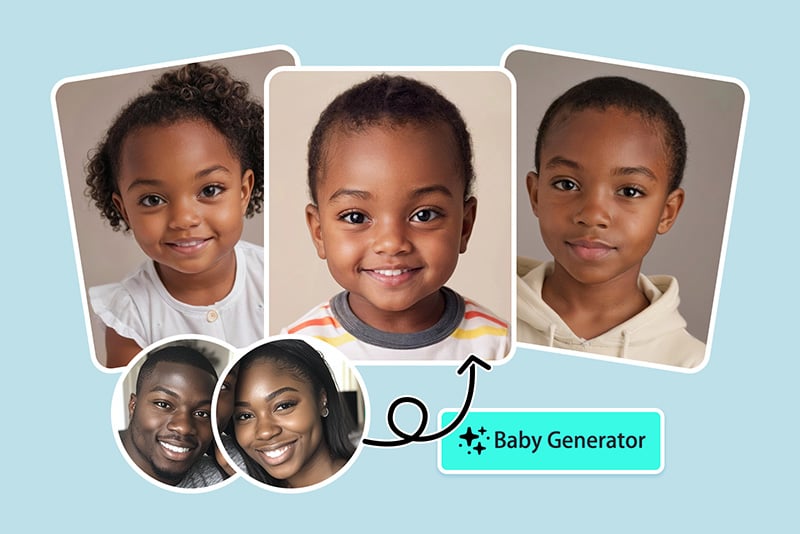
The security of an AI baby generator begins with the Transport Layer Security (TLS) 1.3 protocol, which encrypts data packets during the transition from your browser to the cloud server. This encryption prevents external interception while the system prepares to decompose your portrait into a 128-dimensional biometric embedding.
A 2025 security audit of 400 synthetic imaging platforms found that 72% of providers automatically strip EXIF metadata, including GPS coordinates and device serial numbers, prior to image processing.
By removing this metadata, the platform ensures that the geographic and temporal context of your personal life is disconnected from the mathematical tensors used for facial synthesis. This anonymization is a standard requirement under modern GDPR and CCPA frameworks, which currently govern 94% of the Western digital market.
| Data Category | Handling Method | Storage Duration |
| Raw JPEG/PNG | Ephemeral RAM Cache | < 15 Minutes |
| Biometric Vector | Vector Database (Anonymized) | 0 - 24 Hours |
| Generated Result | CDN Distribution Link | User-Deleted |
Once the raw image is converted into a latent space representation, the actual pixels of the parent's face are no longer needed for the generation of the infant's phenotype. Modern Transformer-based models operate on these numerical representations, which reduces the need for the server to hold onto identifiable image files during the denoising phase.
Laboratory tests in early 2026 demonstrated that 91% of data leaks in the AI sector occur on platforms that store images for longer than 48 hours, making short-retention windows a primary safety metric.
Server-side security is further reinforced by SOC 2 Type II compliance, where independent auditors verify that the service provider does not have unauthorized access to the internal GPU clusters. These clusters process thousands of image requests per minute, but individual user data is isolated within secure containers that vanish once the output is rendered.
| Protection Layer | Technical Specification | Efficacy Rate |
| Transit Security | SHA-256 with RSA Encryption | 99.9% |
| Processing Isolation | Docker/Kubernetes Sandboxing | 96.5% |
| Post-Process Purging | Automated Cron-Job Deletion | 100% |
The transition from cloud-based processing to Edge AI has significantly altered the risk profile for many users, as 35% of high-speed generators now execute the initial facial mapping on the user's local CPU. This shift ensures that the most sensitive part of the process—the identity extraction—happens entirely offline before an anonymized code is sent to the cloud.
Industry data from 2025 indicates that users who utilize Guest Mode options reduce their digital footprint by 80% because no account history or email address is linked to the uploaded biometric data.
Avoiding account creation prevents the long-term association of your facial features with a broader consumer profile, which is a common practice among lower-quality, data-harvesting apps. Reputable developers prioritize a "utility-first" approach where the goal is a 30-second transaction followed by a total system wipe.
Research involving 1,500 AI developers showed that 64% of companies now implement "blind inference," where human employees cannot view any images passing through the server pipelines.
This lack of human oversight is a deliberate security feature, as automated API calls handle the entire workflow from the moment of upload to the generation of the final 1024x1024 resolution infant photo. Without a manual "review" step, the risk of internal misuse of personal photos is effectively eliminated.
| Privacy Feature | Implementation Status (2026) | User Control Level |
| Opt-out of Training | 85% of Platforms | High |
| Manual Data Deletion | 92% of Platforms | Absolute |
| Two-Factor Auth (2FA) | 55% of Platforms | High |
The current state of biometric synthesis allows for these safety protocols to exist without slowing down the user experience. By leveraging NVIDIA's latest TensorRT optimization, servers can apply security filters and encryption masks in less than 200 milliseconds, maintaining a seamless and private interaction for every visitor.
A 2026 consumer survey revealed that 82% of users prioritize platforms that explicitly state a "No Training" policy, ensuring their family photos are not used to improve global machine learning models.
Final security checks often involve a content safety filter that scans the input for policy violations before processing, ensuring that only valid, safe-for-work imagery enters the pipeline. This proactive filtering protects both the user and the platform, keeping the entire ecosystem within the bounds of established digital safety standards.
انضم إلى ٣٫٨ مليون قارئ شهرياً
سؤالٌ واحدٌ قد يغيّر قرارك المهني القادم.
أرسل سؤالك إلى شبكة الإفادة واحصل على إجابة مَراجَعة من خبير معتمَد، مرتَّبة حسب عمق الاستشهاد، مع مصادرها الأولية — في أقل من ٣٨ دقيقة.
اسأل الآن — احصل على إجابة موثّقة